Congratulations Austin Hertel on his first Hartman lab publication!

PhD candidate Austin Hertel’s (PMI) first, first author publication from the Hartman lab has been published in NPJ Vaccines!

RVFV remains a threat to livestock, particularly sheep, goats and cattle, where outbreaks of RVFV can result in high rates of mortality among pregnant and young animals. Though several livestock vaccine candidates exist, their use in pregnant animals is limited due in part to retained virulence. A next-generation vaccine candidate, RVFV-delNSs/Nsm, was developed to overcome these challenges. Importantly, it’s been shown to be safe when administered to pregnant sheep.

In this study, Austin sought to determine if this next-generation RVFV vaccine would protect offspring following maternal vaccination.

Using a model of vertical transmission previously developed in our lab by co-author Cindy McMillen, rats were vaccinated mid-gestation with RVFV-delNSs/NSm. For this study, Austin (and lab tech Ryan) learned how to milk rats in order to quantify the levels of anti-RVFV antibodies circulating in milk!

In fact, the group was able to detect anti-RVFV IgG antibodies in milk up to 28 days post vaccination! The pups themselves also had anti-RVFV IgG antibodies in their blood, which decreased over time following a peak at the time of weaning. The next question was would these maternal antibodies protect offspring to RVFV challenge?

Pups from vaccinated and unvaccinated dams were challenged with pathogenic RVFV at 23 days old and all pups from moms who received RVFV-delNSs/NSm survived challenge to 21 days!

Finally, Austin aimed to determine if pups were fully protected by maternal antibodies by applying DIVA: Differentiation of Infected from Vaccinated Animals. Given RVFV-delNSs/NSm lacks both non-structural proteins, animals who develop antibodies against NSs or NSm have been exposed to the pathogenic virus (infected) while animals who were fully protected from antibodies of vaccinated dams would not have antibodies against these proteins (vaccinated). Of the subset of pups from vaccinated moms who were tested, 3/20 pups had low levels of anti-NSs antibodies.

The assessment of vaccination during pregnancy, and protection of offspring, is a critical component in the development of countermeasures against emerging viral diseases. Great work Austin!!

— Kaleigh Connors

New publication from Drs. Megli and McMillen!

Big month for our group, as we have two papers out from Dr. Cynthia McMillen and PMI PhD candidate, Austin Hertel!

In Nature Communications, Dr. McMillen and first author, Dr. Christina Megli from Magee-Women’s Research Institute, demonstrate the susceptibility of the human placenta to Oropouche orthobunyavirus, which has been the cause of an outbreak in South and Central America – and for the first time – resulted in fatalities.

This recent outbreak has also revealed a previously unrecognized severe outcome in human infection: vertical transmission and adverse outcomes in newborns. Dr. McMillen has previously demonstrated the susceptibility of human placenta to a related bunyavirus, Rift Valley fever virus. The placenta is a complex, multi-structured organ composed of several cell types and regions. Using both trophoblast stem cell derived in vitro cultures and organoid models, alongside ex vivo placenta tissue, the team demonstrated the susceptibility of these cells and tissues to Oropouche virus (OROV).

Using a historic strain which we had at the start of the current outbreak, OROV-BeAn19991, the group first identified that OROV replicates to relatively high titers in human trophoblast cultures and organoids. Cytotrophoblasts and syncytiotrophoblasts are two distinct cell types within the placenta that help facilitate nutrient exchange between mother and fetus. OROV-BeAn19991 replicated to high titer in the cytotrophoblasts and resulted in the induction of interferon-lambda 1, while resulting in a lower titer in syncytiotrophoblasts. Similarly, in trophoblast organoids, which contain trophoblasts in layers that more similarly replicate the natural structure of the placenta, there was a marked increase in OROV infection.

The team was able to collect term placenta following live births and use this tissue to determine infectivity of OROV in an ex vivo model system. Placenta were obtained across several gestational ages (32 to 39 weeks) and separated into villous, chorionic membrane, amniotic membrane, fetal membrane and decidua. OROV was able to replicate within villous, chorionic membrane, amniotic membrane and fetal membrane across 72 hours. However, sustained replication was not seen in decidua culture. Further, samples obtained from 39 weeks gestation did not support OROV replication.  

These data show that trophoblasts and placenta tissue are susceptible to the historic OROV-BeAn19991 strain. The development and characterization of models at the maternal-fetal interface are critical to the development of countermeasures for emergent viral infections.

The University of Pittsburgh School of Public Health did a great write-up on this publication, found here!

— Kaleigh Connors

CVR Trainee Day 2025

Another summer with a day dedicated to the trainees at the CVR! This year’s trainee day was facilitated in-part by Cade (grad student) and Rachael (post doc) and was held on June 12th here at Pitt!

Kaleigh (post doc) presented on her work entitled “Human monoclonal antibodies protect against inhalational RVFV infection in a rat model.”

Austin (grad student), gave a talk on his work entitled “Maternal immunity and neonatal protection: Evaluating a next-generation RVFV Vaccine candidate in a pregnancy model.”

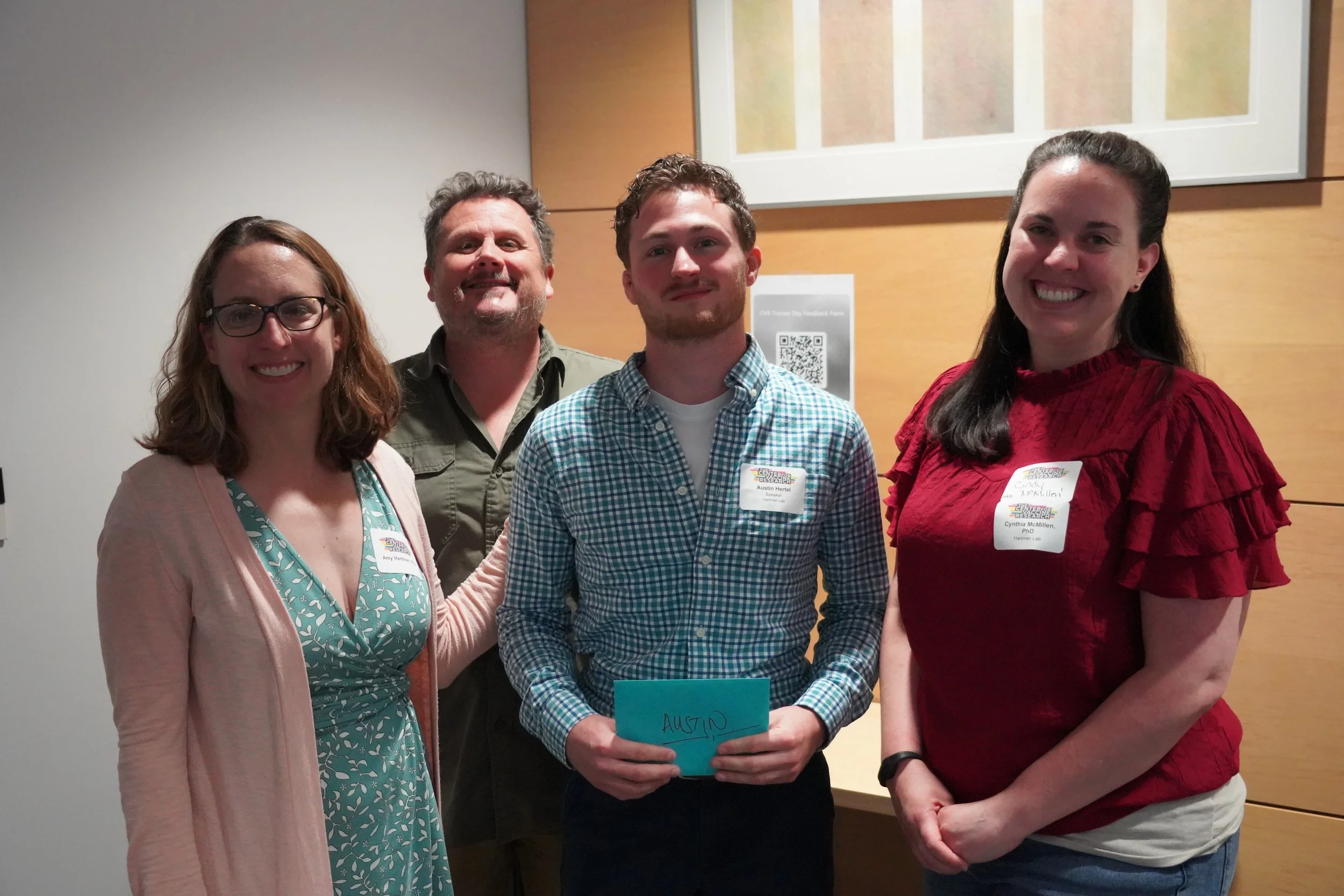
Drs. Amy Hartman and Paul Duprex; Austin Hertel and Dr. Cindy McMillen

In addition to giving a fantastic talk, Austin was presented with the 2025 Director’s Award by CVR director, Paul Duprex! We are so proud!!

Already looking ahead to next year’s Trainee Day… who and what will be presented next?

Undergrads Take Over the Lab!!

We are happy to have both of our Pitt undergraduates students with us in the lab full time this summer!

Gia (left) is a rising senior from Pitt Public Health BSPH program. She has been a member of our group since 2023 and has joined our lab full time for the summer as a Research Assistant! She supports all projects within our group.

Neal (right) received a Summer Undergraduate Research Award (SURA) through the Dietrich School of Arts and Sciences. This award provides a stipend over the summer to conduct independent research with Dr. McMillen!

Two Hartman-lab graduates in 2025!

Maris Pedlow (IDM MS) and Kaleigh Connors (IDM PhD) both graduated at the School of Public Health ceremony on May 2nd!!

Dr. Rachael Rush Receives Postdoctoral Leadership Award!

Huge congratulations to third-year postdoctoral scholar in our group, Dr. Rachael Rush, on receiving the 2025 Postdoctoral Leadership Award! This award is given to an individual who has demonstrated a profound, sustained, or leadership contribution to the University of Pittsburgh Postdoctoral Association (UPPDA).

Dr. Rush leads the Lanternfly working group in the Hartman lab, with a focus on RVFV entry, pathogenesis and dissemination. She is a pivotal member of our lab, providing outstanding mentorship to trainees and consistently strengthening the collaborative and supportive spirit of our group.

She served as the 2023-24 president of UPPDA and currently serves as the postdoctoral representative on the Senate Research Committee. Her deep commitment to research, mentorship, and community engagement extends well beyond the university and the lab.

Read more about Dr. Rush on the Pitt Public Health News page!

HLCD aka Ghost Blogger

If you’ve noticed an increase in the frequency of blog posts, you would be correct to surmise that we have a ghost blogger. Kaleigh is now officially named Hartman Lab Communications Director. She was tired of me neither having the bandwidth or capacity to update frequently enough. I am happy to off load this. The website will be updated more frequently now. She is open to suggestions for content. :-)

Congrats to Master of Science, Maris!!

We are excited to share that IDM Master’s student Maris Pedlow has successfully defended her thesis (to a full room and Zoom!) and become a Master of Science! Maris joined our lab last spring, and a year later, has contributed to two different projects which are nearing publication.

Maris worked primarily within the neuropathogenesis and entry projects in our lab with (new) postdoctoral associate Kaleigh Connors and laboratory technician, Zach Frey. She successfully established and utilized multiple CNS cell lines to characterize Oropouche virus (OROV) infection and tropism. This work has contributed to a preprint which is currently online. She found that OROV replicates well in immature neurons, microglia and astrocytes, contributing to data on OROV preferences within the CNS.

Committee members: Drs. Amy Hartman (IDM), Priscilla M Da Silva Castanha (IDM), and Guillermo Rodriguez Bey (HuGen), with Maris Pedlow, MS!

Simultaneously, Maris contributed to an ongoing project with the Amarasinghe lab at Washington University of St. Louis. For this project, she assessed antivirals with pan-bunyaviral potential, with the goal of limiting replication and therefore preventing infection in vitro. Look out for more about this project soon!

We are incredibly proud of the time and effort Maris put into her work in our lab, while juggling a full class schedule. She enthusiastically learned new techniques, established new protocols for our group, and coordinated several lab dinner outings.

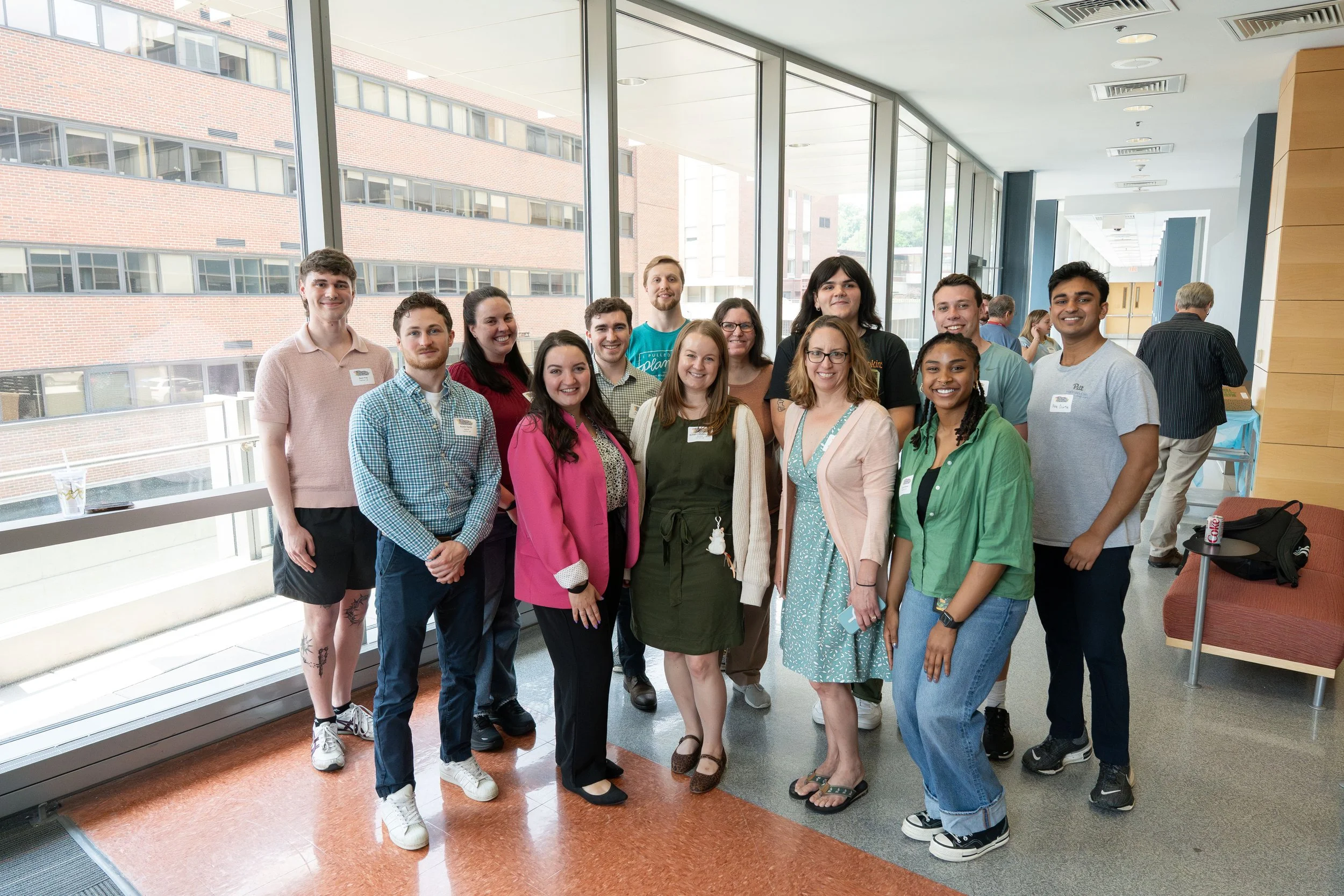
After her defense, we celebrated with treats in the CVR break room (the whole lab group pictured below)! We are excited to see where Maris Pedlow, MS, ends up in her next adventure!