
We have a new publication from our group, led by our former undergraduate student/technician Zach Frey, now published in the Journal of Virology! This is the culmination of work across multiple folks from our group, Dr. Zak Wills in the Department of Neurobiology, and our collaborators in the Leung and Amarasinghe labs at Wash U St. Louis entitled “LRP1 facilitates Jamestown Canyon virus infection of neurons.”
While this project started as a basic characterization of Jamestown Canyon virus (JCV) neuropathogenesis, Zach found that the low-density lipoprotein receptor related protein 1 (Lrp1) plays a significant role in viral entry (see RVFV and OROV).
JCV is an orthobunyavirus endemic to North America that manifests as asymptomatic or a mild febrile illness in people. However, like other bunyaviruses, JCV infection can progress to neuroinvasive disease, an outcome that remains understudied. Incidentally, LRP1 is highly expressed in the brain, including neurons, astrocytes and microglia. When these cells (microglia, BV2; neurons, N2a) lack Lrp1, JCV binding, internalization and replication are all reduced:
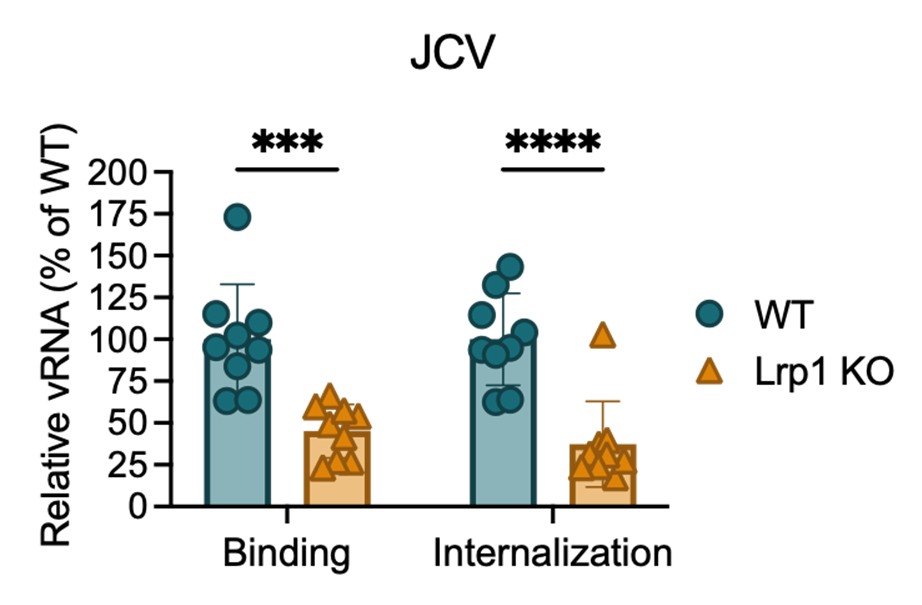
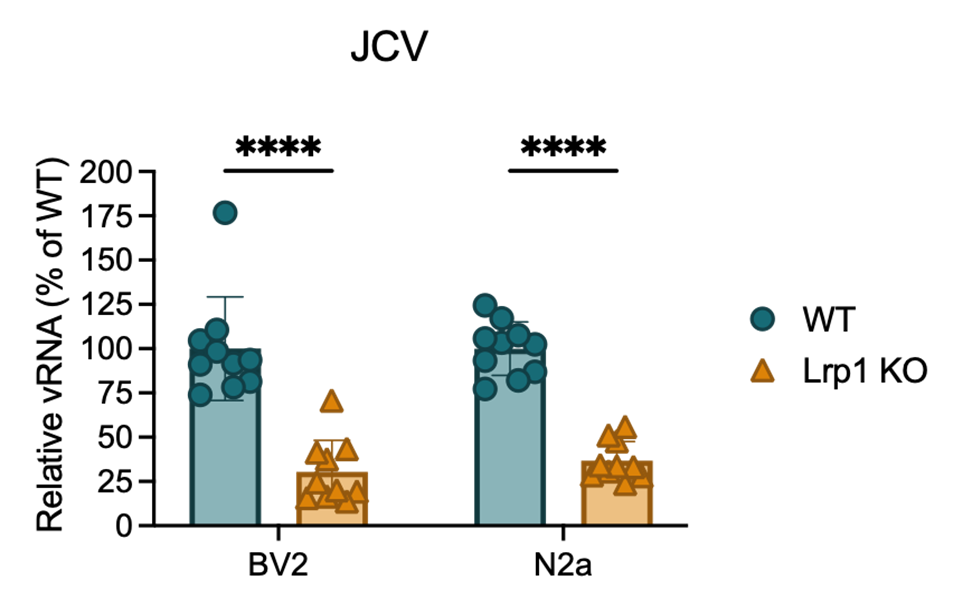
The dependence on Lrp1 for infection in was further confirmed by incubating JCV with Lrp1 proteins. Zach found that after using this JCV:Lrp1 mixture to infect cells, the amount of virus collected after 24 hours was significantly reduced in a dose-dependent manner. In addition, our collaborator Dr. David Price (Leung Lab), characterized the binding affinity to these clusters:
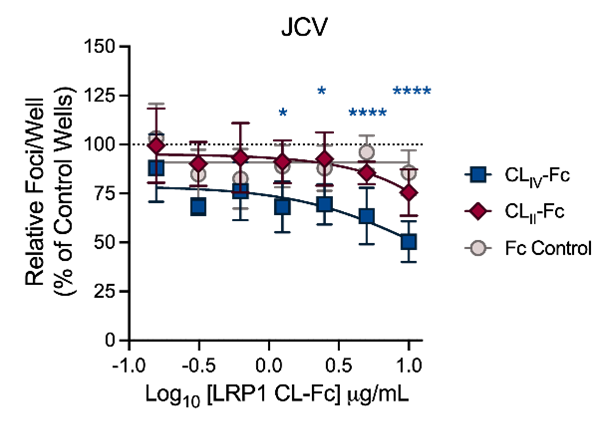
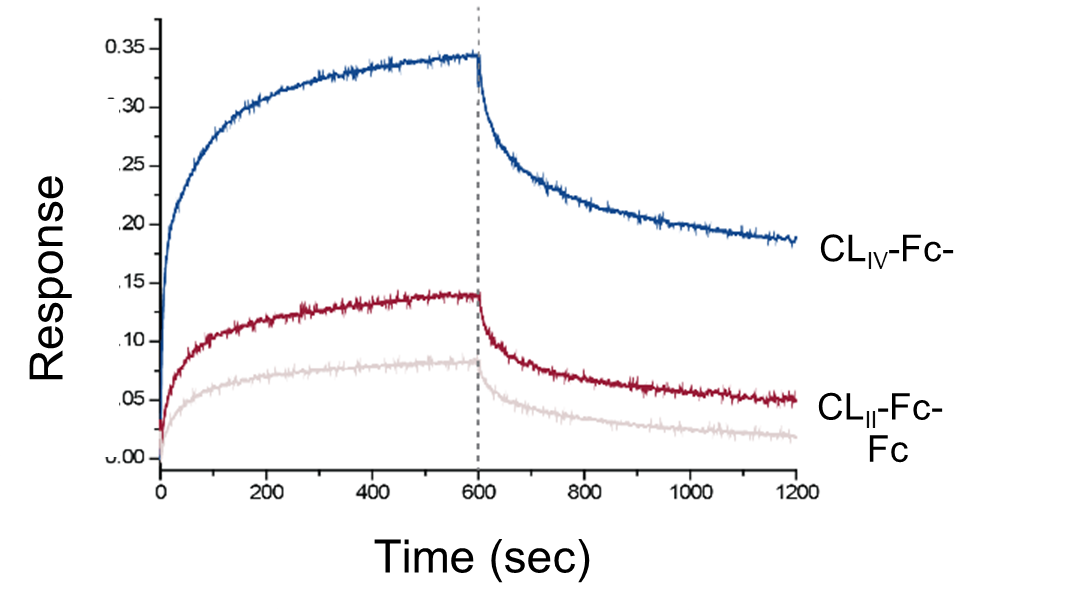
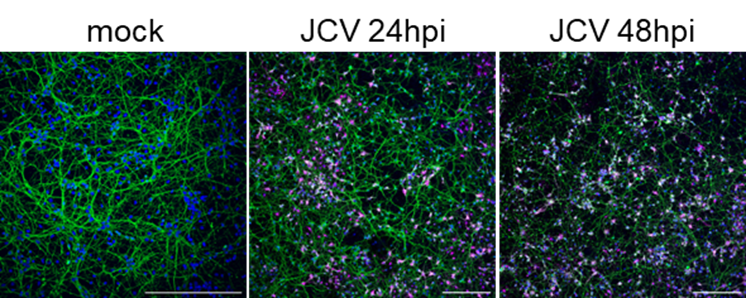
Zach then began to characterize JCV infection in a primary neuron model of infection. At different infection doses, he found that JCV replicates well in these cells and to high titer. In addition, he confirmed that these primary neurons have Lrp1 expression. The next step was to determine if Lrp1 played a role in JCV infection of primary neurons.
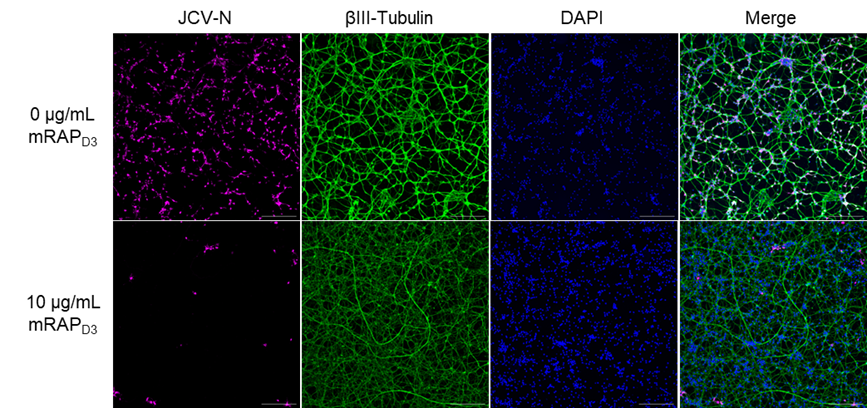
Using the high-affinity LRP1 binding protein mRAP-D3, he found that he could reduce JCV infection in primary neurons in a dose dependent manner. There is a striking reduction in JCV nucleoprotein by immunofluorescent staining at the highest dose of mRAP-D3:
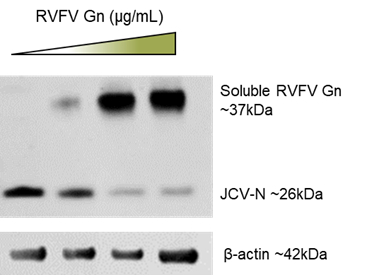
Another interesting part of this story involves RVFV glycoprotein Gn. We previously identified that RVFV Gn binds to clusters II and IV of LRP1, and that treatment of cells with purified Gn protein completely inhibits infection with RVFV and OROV. Performing this experiment using JCV, one measure that Zach used was western blot of viral proteins. Zach determined that increasing concentrations of RVFV Gn competitively inhibits the accumulation of JCV nucleoprotein in the cells. Alongside his other data, this suggest that JCV likely binds to similar epitopes of Lrp1 clusters II and IV to RVFV.
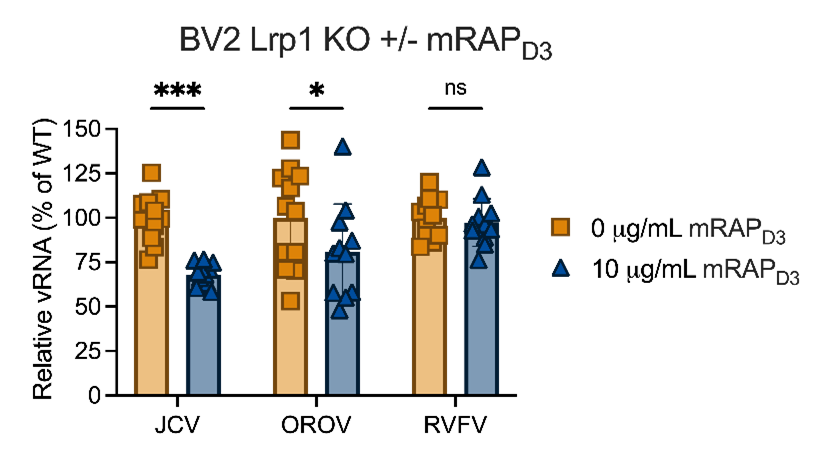
Finally, since JCV infection was not completely blocked by depletion or inhibition of Lrp1 use, Zach investigated the role of other LDLR receptors. He did this by treating LRP1 knockout cells with mRAP-D3, which not only binds to LRP1, but also other LDLRs. The premise was that if JCV requires both Lrp1 and another LDLR, the combination of Lrp1 KO cells and treatment with mRAP-D3 would further reduce JCV infection. Indeed, this is what Zach found, suggesting that another LDLR may be involved in JCV entry.
These findings offer a significant advance in the understanding of viral entry and bunyavirus pathogenesis, as previous findings by our groups and others on RVFV, OROV, and SFTSV demonstrate LRP1 as a pan-bunyaviral host factor. This offers an opportunity for the development of broad pan-bunyaviral therapeutics.
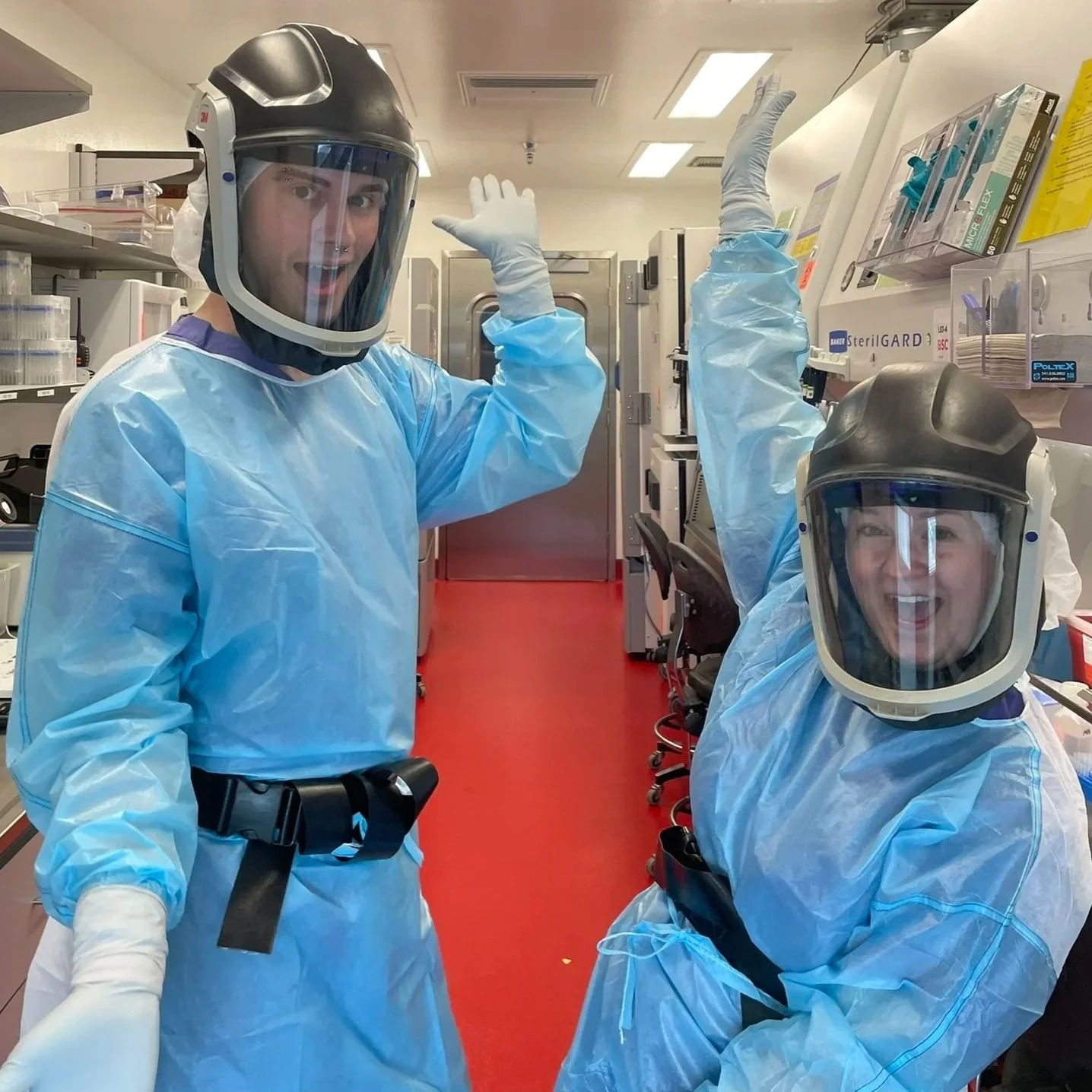
Zach is currently a PhD student at UNC. This work was supported by postdocs Kaleigh and Rachael, and PMI PhD candidate Cade!